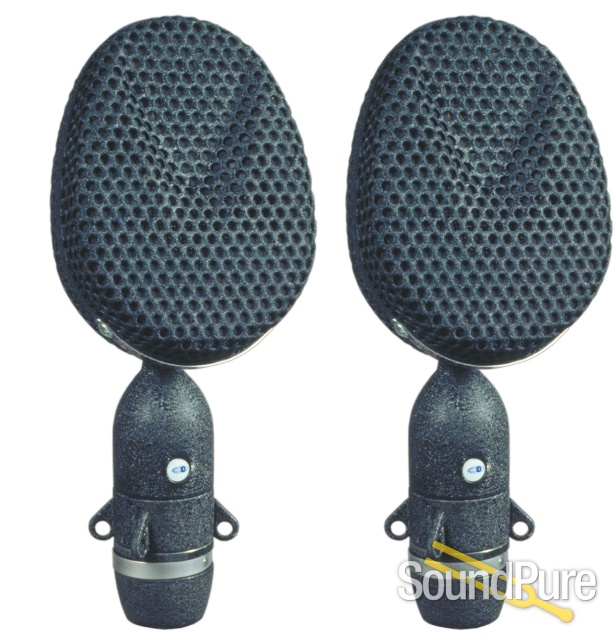
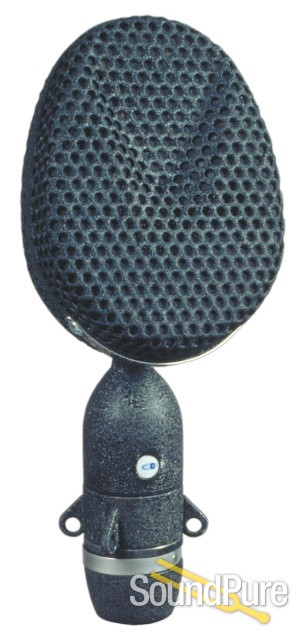
The SF-24 stereo ribbon microphone is a phantom powered version of our popular SF-12 stereo ribbon microphone. It combines the SF-12's high quality audio performance, outstanding stereo separation and imaging with our exclusive active electronics system for ribbon microphones. The SF-24's output of -38 dB is a full 14 dB more sensitive than our non-powered SF-12, putting its sensitivity on par with that of phantom powered condenser microphones. The unique electronics and custom designed FET's used in the SF-24 allow for ultra-quiet operation, with self-noise of lower than 18 dB.
Like an SF-12, the SF-24 is actually two matched ribbon microphones placed one above the other in a coincident pair, each aimed 45 degrees from center in the classic Blumlein configuration. The magnet/pole piece structure of each ribbon transducer delivers a wide, uniform frequency response with no substantial peaks or dips, and the 1.8-micron ribbons produce superb transient response. Frequency response is excellent regardless of the angle of sound striking the ribbons and off-axis coloration is negligible.
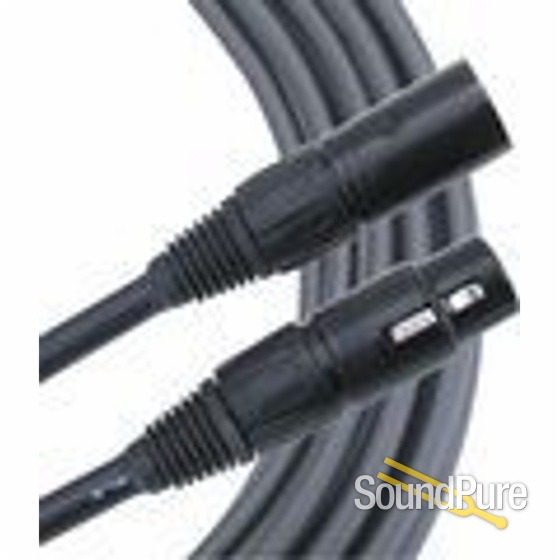
The SF-24's extension cable comes with a Y adapter that splits into separate 3-pin male XLR connectors labeled "Upper" and "Lower" for the upper and lower capsules of the microphone (when held vertically).
Our active ribbon™ mics (SF-24 and R-122) are as sensitive as phantom powered condenser microphones, allowing you to use virtually any mic preamplifier or board pre. Conventional ribbon microphones are 15 to 30 dB less sensitive than condenser mics, necessitating the use of high-quality, high-gain microphone preamplifiers when recording softer sound sources like acoustic instruments, vocals and room ambiance. The SF-24 contains two fully balanced, discrete head amplifier systems utilizing specially wound toroidal transformers and ultra-low noise FET's, each delivering a sensitivity of -38 dB. This lets you mate an SF-24 to any preamplifier with average gain characteristics. Even with quiet sound sources, you'll have enough level to drive any recording medium.
It is important to note that the SF-24's higher sensitivity does not create additional self-noise. All of the SF-24's increased level comes from its large, specially wound toroidal transformers - that wonderful thing called "free gain." The level at the each of the transformers is actually hotter than what comes out of the microphone. The phantom powered system operates at less than unity, adding no noise of its own. This system took years to develop and is in patent pending status.
The electronics in the SF-24 provide a perfect load to the ribbon elements at all times, allowing the microphone to deliver 100% of its full sonic potential regardless of the input characteristics of the following mic-pre. Due to its low-impedance output, SF-24's can also be used on extremely long cable runs with minimal signal loss.
A good impedance match is critical to ribbon microphones. Impedance mis-matching loads a ribbon improperly, resulting in loss of low end, diminished body, lowered sensitivity and an overall compromised performance. With our Active Series ribbon mics, the ribbon element sees a perfect impedance at all times, regardless of the preamp you use, so its performance will never be compromised by the effects of improper loading. In addition, the ribbon element cannot be damaged by phantom power, electrical glitches or miswired cables.
Like the SF-12, the SF-24 is uncanny for creating "you-are-there" stereo recordings that capture not only the instrument(s) being recorded, but, depending on how the microphone is positioned, varying degrees of the acoustical space. In addition, the increased sensitivity and impedance matching circuitry allows for more consistent results in a variety of recording situations and with a wider selection of mic pre's.
For mono recording, phase compatibility between the two sides of the SF-24 is excellent. This allows you to combine the two channels perfectly in mono without creating undesirable phase artifacts. This is particularly useful when capturing a wide sound field in mono; for instance, a singer who tends to move off the "sweet spot" of a mono microphone. Either side of the SF-24 can also be used individually as a mono microphone.
The SF-24 excels on classical piano, drum overheads, ensemble and orchestral recordings, a wide variety of percussion instruments, virtually all acoustic instruments, small vocal ensembles, large choirs, etc.
Features
-
Phantom powered circuitry provides high output and impedance matching
-
True stereophonic (Blumlein and M-S) recording from one microphone
-
High SPL capabilities
-
No distortion up to maximum SPL rating<
-
Extremely low residual noise
-
Ribbon elements are not affected by heat or humidity
-
Absence of high frequency phase distortion
-
Equal sensitivity from front or back of elements
-
Consistent frequency response regardless of distance
-
High efficiency, matching toroidal transformers
-
Very low magnetic leakage
Applications